

Still life
A short essay on dining tables + a chlorophyll pitch announcement

Hello and welcome back to shelf offering, a Tuesday newsletter by Apoorva Sripathi. Writing this newsletter is a crucial, rigorous, and joyful part of my work, so if you’d like to support me, follow 💌shelfoffering on Instagram, share this post, and consider becoming a paid subscriber. Thank you.
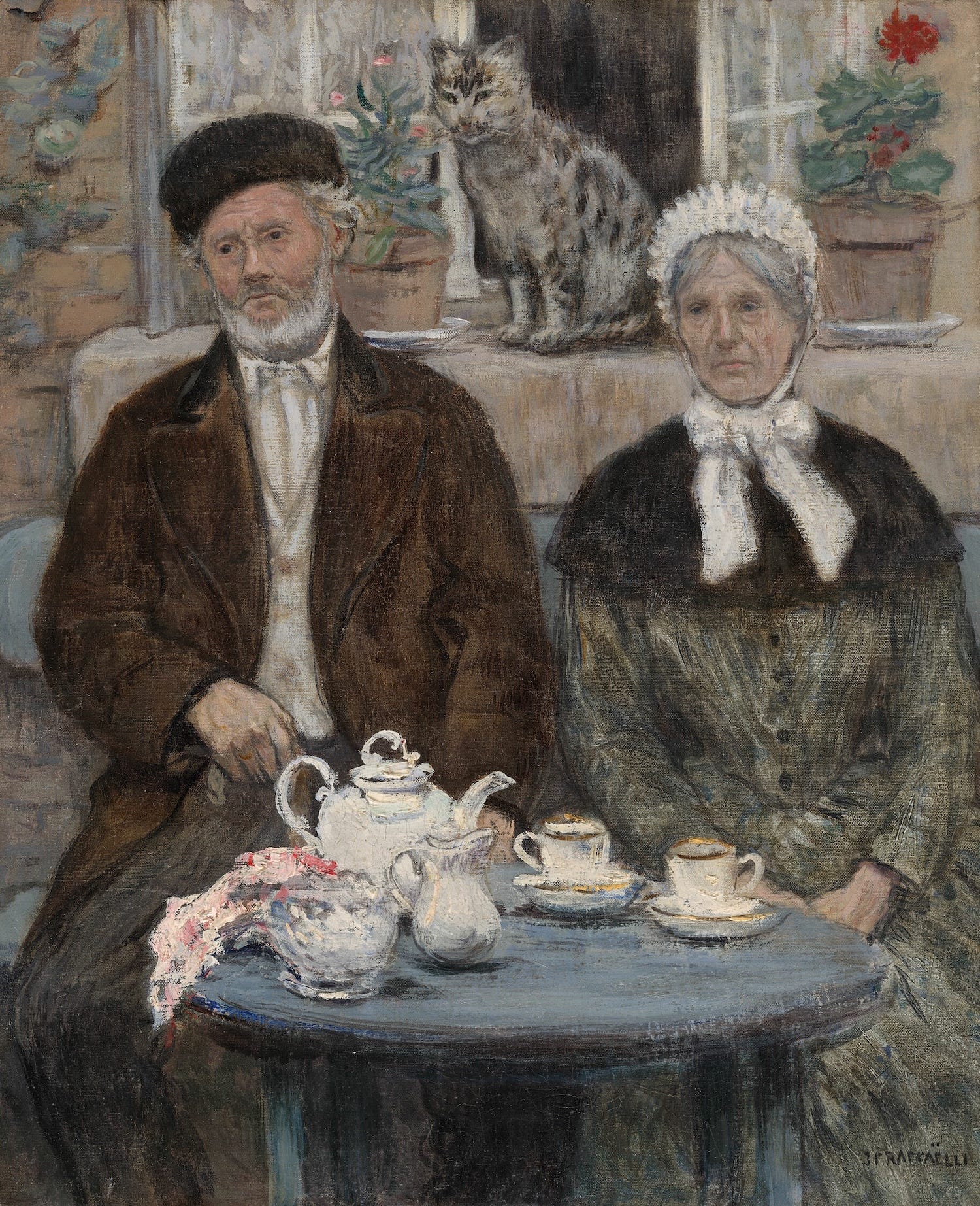
I don’t know what my home says about me or my place in the world but I do know that it reflects my anxiety about not having a dining table, which has been ramped up in the last few months.
I did have a dining table growing up, but I didn’t respect it as much. My grandfather fashioned it out of leftover MDF that was used for the shelves with a shiny wood-like veneer on top, which was a very fashionable thing to do in the 90s and felt very fake. But somehow, the table felt quite real and occupied the end of our long living room, to the right of the fridge. And as real as it was, it remained neglected, used as storage throughout its life. I only dined on it last year when my partner and I went back home to Chennai. It was, however, a site of endless bounty, bearing everything from my grandmother’s paraphernalia (comb, talcum powder, mirror, medicines), tiny green bottles of ground salt and pepper, biscuits, and newspapers and textbooks, to my father’s pens and my grandfather’s religious texts, my mother’s bank identification cards, and my sister’s laptop… there was stuff there that found no particular home in my home. I grew up feeling like that, a bit adrift and on display, and wished we’d all just exist in a dark corner somewhere.
We did need a table, but we also didn’t need one. Meals were eaten sitting on the floor with the plate in front of us, backs bending over to accommodate food into our bodies or curled up on a chair if it was more hurried and casual, like breakfast. But we did use the table when we had people over, especially old relatives who could not bend their knees like we could, and everything was cleared off from its surface. Suddenly all objects found their home, leaving behind little spotless traces among the gathered dust as clues that contained both our inside and outside lives. And after our guests left, the objects would make their way back – somehow more of them than before, residues of our lives as an isolated art exhibit. The table was where the public sphere would mingle with the private realm, finding an extension through objects.
My first useful, or rather used, table was in the shared north London flat I occupied while attending university. It was at the end of the house, behind a wall that separated the kitchen and the dining room and abutted the vast, feral garden that also contained a table. Before I moved into this flat on the invitation of my friend who already lived there, I dined there first. I don’t remember what we ate – there was bread, salad, pasta, cheese, and wine – but I remember the warmth my friend lavished upon me. And I remember the table that could seat about 8 of us, built in a French farmhouse style with reclaimed wood and patterned with thick streaks of spalting throughout. Could you be loved by an inanimate object? I think this table bore us all: traces of our past, excesses of our appetites, anxieties of academic work, the fantasies and realities of relationships, possibilities of joy and friendship, parties, drinking binges, and perhaps an escape from the limitations of what life (and money) accorded us. The table out in the garden was fashioned after a picnic bench, where the seats were fixed into the table to make it one piece, and weathered silver-grey. Months after I moved in, my friend told me that both tables were constructed by a PhD student who lived in the house before us and helpfully thought that future students would benefit from the fruits of his labour. He thought of it as an inheritance and we were the lucky ones, the last batch before the pandemic set in and students couldn’t travel to attend university in person.
Our current coffee table, that my partner has owned since 2018, comes from his parents. When I moved in, I brought with me a collection of trinkets along with my unconscious family habit of amassing bits and pieces that end up being strewn around the house. We picked up a second-hand square-shaped hollow wicker basket in an attempt to contain them: at first, coasters smuggled from various pubs and two glass candlesticks. Then, the objects began to pile up. Medicines, bills, chargers, cough drops, rubber bands, chip clips, pens, tiny silica gel packets, jute coasters, ointments. It became a challenge to see how much crap we could fit within a 22cm basket (not much of a challenge in the first place). We couldn’t really wipe the remnants of life so we shoved it inside a rattan side table and haven’t paid any attention to it since.
But no matter how much you draw boundaries between the self and its commodities, our nexus of dependency can erode the fortifications, because soon enough the coffee table was filled with magazines and books and leftover packaging material. In Living Rooms, Sam Johnson-Schlee writes that ‘in order to make room to live it will be necessary to remember all the ways in which life has already found its way into the interior.’ And so I keep clearing our coffee table before breakfast, lunch, and dinner, in anticipation of what isn’t there and what is to come.
Pitch poetry and fiction to chlorophyll x Feminist Food Journal: the architecture of food
It’s what the title says. We’ve received some lovely non-fiction pitches for this collaborative issue and we really really want more poetry and fiction! Details here and we can pay you this issue! If you have enjoyed reading the work we’ve been putting out, support us with a donation that helps build our independent literary magazine.
Beautiful meditation on how objects absrob the rhythms of daily life. The image of the MDF table with fake veneer becoming a repository for everything that didnt have a home elsewhere really captures something. I've noticed tables tend to become these accidental archives too, collecting layers that map out what's actually happening in a household better than any intentional decor could.
Love this. In my house too there's a long table which is rarely used for dining. It accumulates books, mail, odds and ends... I am reassured that other people live this way. We eat sitting on sofas and chairs, our plates or bowls in our lap or on a side surface...in a loose circle. And sometimes on the floor.